history
The Rancilio Silvia: A Parabiago Home Espresso History
By Home Espresso Bar Editorial Team · November 1, 2026

The Rancilio Silvia is a physical chronicle of a small Parabiago workshop that grew into a global brand. By the end of this article you will know who founded Rancilio and why the company cites both 1927 and 1930 as its birth year, how a prototype intended as a thank-you gift became the Silvia, the materials and engineering choices that give the machine its distinctive heft, and how informal “V-series” revisions have kept the design relevant for more than two decades. You will also see which designers shaped Rancilio’s commercial line and how the brand’s milestones intersect with the Silvia’s evolution.
Key takeaways
- Roberto Rancilio applied in March 1926 to the town of Parabiago to build a small building at Via Galeazzi 1a, and built his inaugural machine, La Regina, in 1927, while the formal company, Officina Meccanica Roberto Rancilio, was registered in 193021.
- The Silvia originated as a late-1997 prototype gift for key importers, never intended for retail, and was later released under the Miss Silvia name54.
- Built on the Audrey’s internals but housed in a brushed stainless-steel chassis with a brass boiler, brass grouphead and ULKA pump, the Silvia weighs 14 kg, over 50 % more than the 9 kg Audrey4.
- Community-coined V1-V6 labels track six informal generations from 1997 to the present, each adding features such as a new drip tray, thicker steam wand, removable copper heating element, boiler insulation and a black colour option4.
- Commercial machines have been shaped by designers Giovanni Travasa (Alpina 1957, Ducale), Marco Zanuso (Z8 1971, Z9 1980 - with alternative dates of 1965 and 1974 on Wikipedia), and Bruno Rossio (Z11 1988)1.
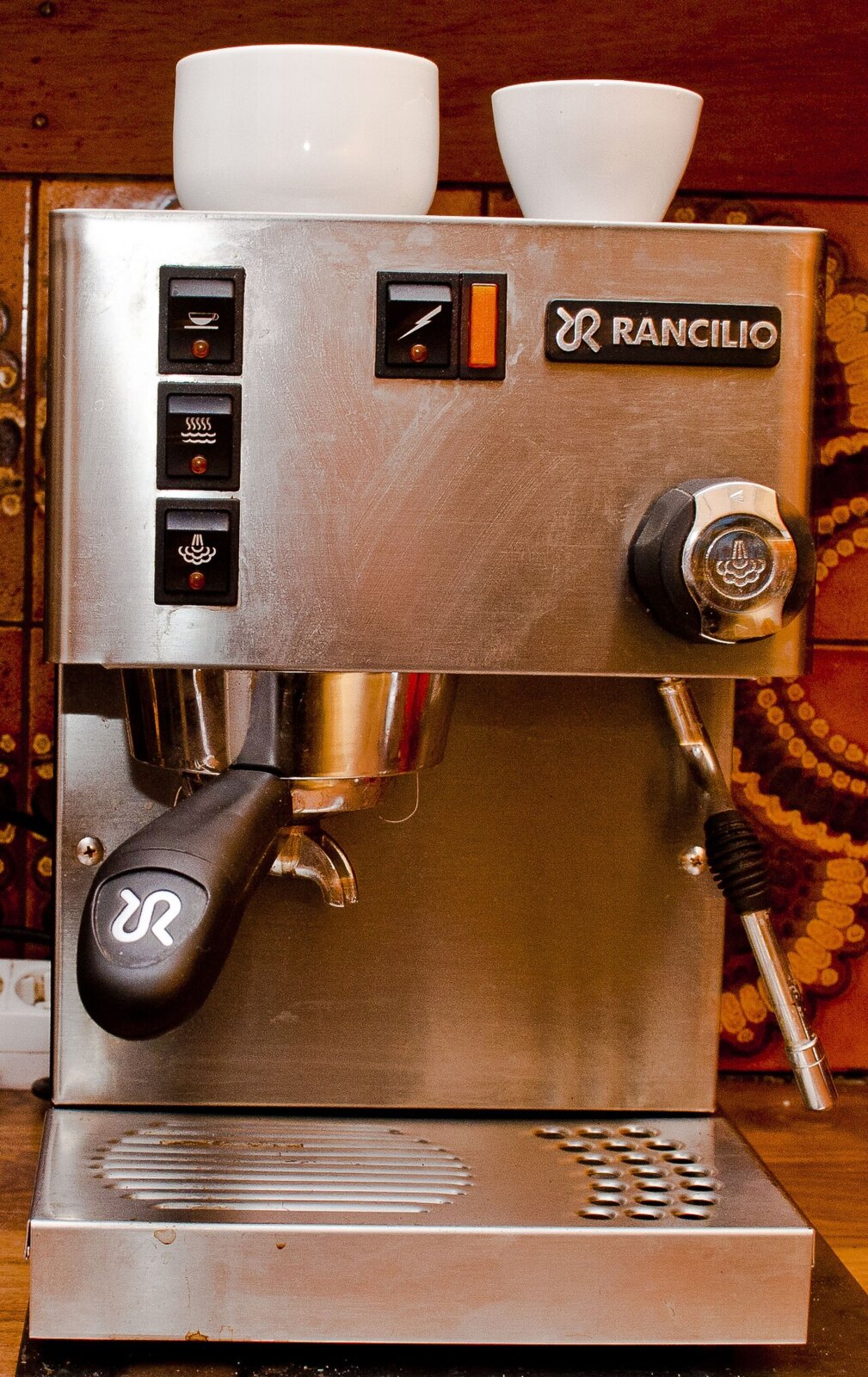
Origins of Rancilio and the early workshop
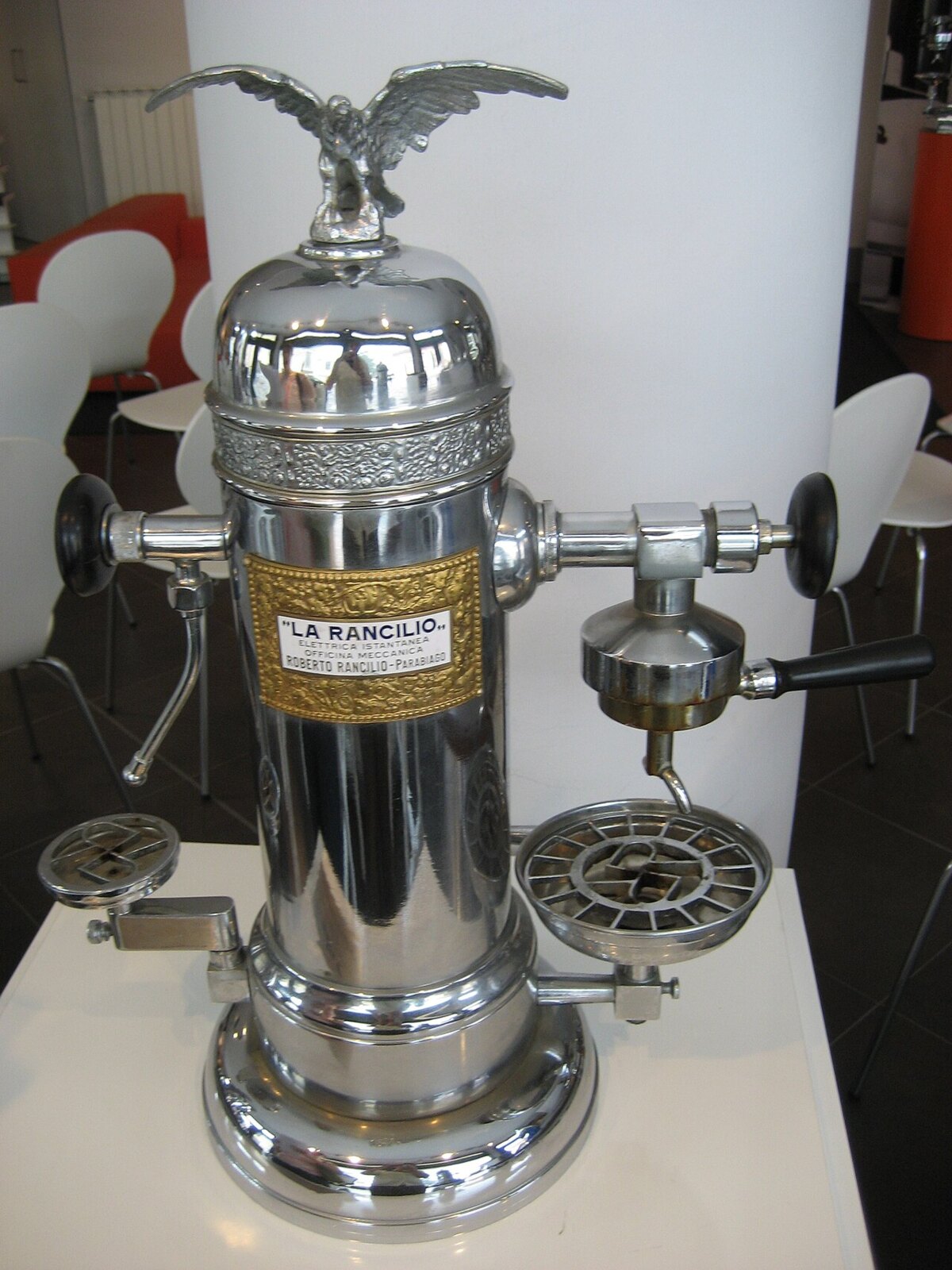
Roberto Rancilio was born in Parabiago, a town just outside Milan, on 23 April 1896 and died there on 4 January 19562. In March 1926 he applied to the town of Parabiago to build a small building at Via Galeazzi 1a, marking the physical start of the Rancilio workshop2. Within a year he hand-assembled his first coffee machine, La Regina, a steam-driven vertical-boiler unit adorned with Belle Epoque gilding and the double-R logo that still identifies the brand23.
The company’s official registration as Officina Meccanica Roberto Rancilio came three years later, in 19301. Rancilio therefore lists both 1927, the year of its first machine, and 1930, the year it was officially established, reflecting the dual milestones of invention and formal business establishment.


From commercial success to the home market
Rancilio first showcased its products at the Milan International Fair in 19382, and after World War II introduced the Ideale (horizontal boiler, 1948) and the Fortuna lever model ( 1949)2. The firm was renamed La Rancilio di Roberto Rancilio in 1954, and following Roberto’s death in 1956 his three sons assumed control1.
Design talent entered the picture in the late-1950s and 1980s: Giovanni Travasa created the Alpina and Ducale in 1957, Marco Zanuso contributed the Z8 in 1971 and Z9 in 1980 (though Wikipedia records earlier dates of 1965 and 1974)1, and Bruno Rossio delivered the Z11 in 19881.
Rancilio’s first foray into domestic espresso came with the Miss Rancilio line in 1989, which bundled the Audrey espresso machine and the Rocky grinder3. This set the stage for the Silvia, which debuted for the home market in 19971, alongside the Millennium by Renato Fusi and the Orbita by Marco Bonetto1.
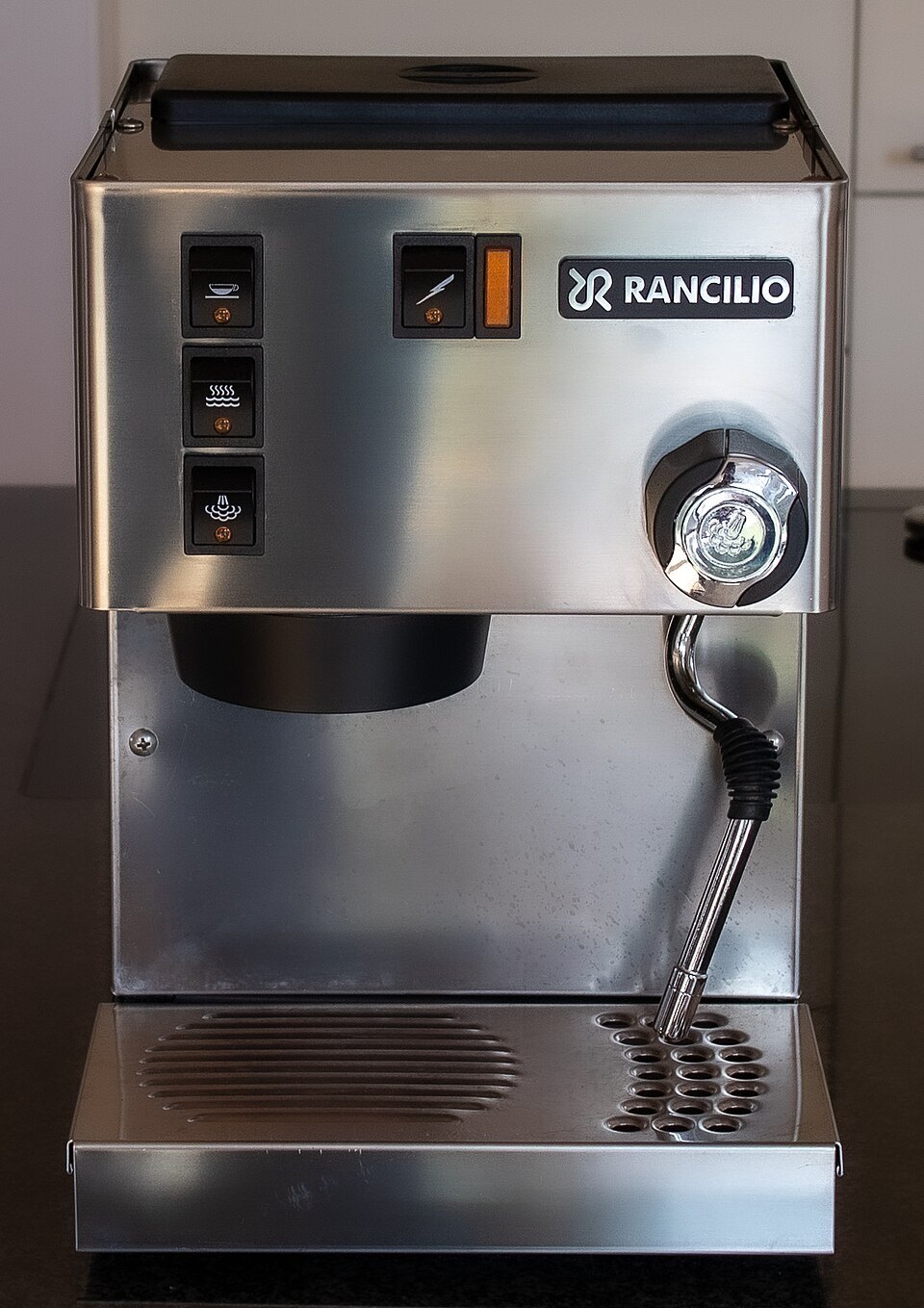
Birth of the Silvia
According to a 2007 CoffeeGeek first-look, the Silvia began life as a late-1997 prototype created as a thank-you gift for Rancilio’s key importers and vendors, with no initial intention of commercial sale5. Wikipedia confirms that the machine was officially marketed as Miss Silvia4.
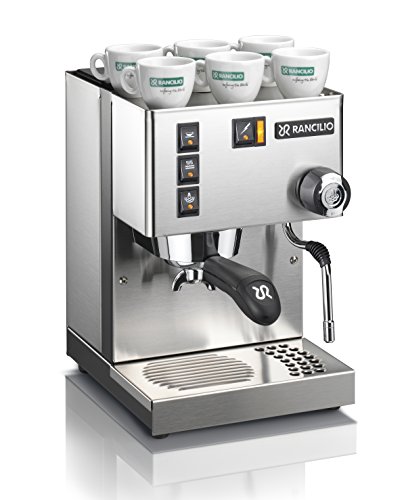


How the Silvia is built
The Silvia inherits the Audrey’s internal architecture, single brass boiler, brass grouphead, and a vibratory ULKA pump, but is encased in a substantially heavier steel chassis. Its exterior features a rectangular brushed stainless-steel case, a cylindrical brushed steel collar surrounding the grouphead, and matte black rocker switches that replaced the earlier translucent orange ones4. At 14 kg, the Silvia is more than 50 % heavier than the 9 kg Audrey4, a weight that contributes to thermal stability and a solid, industrial feel. The machine’s single brass boiler and brass grouphead are complemented by a removable copper heating element (re-introduced in the V4 generation) and, from V5 onward, added boiler insulation to improve temperature consistency4.
Informal version history (V1-V6)
Rancilio does not officially label its revisions, but the espresso-enthusiast community has coined a V-series nomenclature to track incremental changes:
| Generation | Years | Notable changes |
|---|---|---|
| V1 | 1997 - July 2006 | Original release; brushed stainless case, orange rocker switches |
| V2 | August 2006 - 2008 | New drip tray and updated grouphead collar |
| V3 | 2008 - 2013 | Thicker 10 mm steam wand with single-hole tip and ball joint |
| V4 | 2013 - 2016 | Removable copper heating element restored |
| V5 | 2016 - 2020 | Boiler insulation added; split into Silvia M (manual) and Silvia E (electronic) |
| V6 | 2020 - present | Slimmer steam wand; black colour option with matte black grouphead cover4 |
The community’s V-labels help owners pinpoint the exact feature set of their machine, even though Rancilio itself does not market these distinctions.
Milestones and recent developments
The Silvia’s 20th anniversary was marked in 2018 with the release of the Silvia Black1. In 2020 Rancilio launched the dual-boiler Silvia Pro1. That same year marked the introduction of the V6 generation, which refined the steam wand and added the black aesthetic4.
Rancilio’s corporate trajectory also shifted in 2013 when the group joined the Ali Group, a move confirmed by both the company timeline and Wikipedia1.
Answering common questions
Who founded Rancilio and when?
Roberto Rancilio, born 23 April 1896 in Parabiago, founded the workshop that would become Rancilio Group2.
Why does Rancilio list both 1927 and 1930?
1927 marks the hand-built debut of La Regina, the company’s first coffee machine, while 1930 records the official registration of Officina Meccanica Roberto Rancilio21.
How did the Silvia begin?
The Silvia started as a late-1997 prototype gift for key importers, not as a planned retail product, and later entered the market under the Miss Silvia name54.
How is the Silvia built?
It combines Audrey-derived internals (single brass boiler, brass grouphead, ULKA pump) with a brushed stainless-steel case, a cylindrical steel collar, matte black rocker switches, and a weight of 14 kg4.
How did the Silvia change over the years?
From the original V1 to the current V6, the machine received a new drip tray, thicker steam wand, removable copper heating element, boiler insulation, a split M/E line, and a black colour option, all tracked by the informal V-series labels4.
Who designed Rancilio’s commercial machines?
Key designers include Giovanni Travasa (Alpina 1957, Ducale), Marco Zanuso (Z8 1971, Z9 1980, though Wikipedia cites 1965 and 1974), and Bruno Rossio (Z11 1988)1.
Closing thoughts
The Rancilio Silvia illustrates how a modest workshop in Parabiago evolved into a brand whose design language still resonates. From a handcrafted 1927 prototype to a steel-clad home espresso workhorse, the Silvia’s story is anchored in the founder’s early ingenuity, a series of thoughtful material choices, and a succession of community-identified refinements that have kept the machine relevant for over two decades. Its lineage, woven through the contributions of celebrated designers and marked by strategic corporate milestones, offers a clear view of why the Silvia remains a touchstone in espresso history.


