history
The History of Nespresso: Favre's Capsule and the 1986 Launch
By Home Espresso Bar Editorial Team · November 1, 2026

The story of Nespresso is a tale of engineering, coffee culture, and a tiny aluminum pod that reshaped how we brew espresso at home and in offices. By the end of this article you will know who invented the capsule, why a bar in Rome sparked the idea, how the sealed design traps air to create crema, the timeline from the 1976 patent to the 1986 market debut, the material shift that made the pod iconic, and how the Vertuo line’s centrifugal extraction differs from the original system. All of this is grounded in the design decisions that turned a simple concept into a global coffee brand.
Key takeaways
- Eric Favre, an aerodynamics engineer from Vaud, conceived the sealed coffee capsule while working in Nestlé’s packaging department after joining in 19751.
- According to House of Switzerland, a visit to Rome’s Caffè Sant’Eustachio inspired Favre to attribute espresso flavor to short-burst lever pumping, which he linked to oxidation and the presence of air1.
- The capsule’s sealed “monodose” system traps air and ground coffee before water is forced through, producing the characteristic crema of Nespresso espresso12.
- Nestlé patented the system in 1976, launched the product officially in 1986 in Japan, Italy and Switzerland, and repositioned it toward high-end consumers in 198835.
- Since 1994, capsules have been made of aluminum, and modern Nespresso capsules feature aluminum bodies and perforated tops with an interior lined with a food-grade lacquer, and the VertuoLine introduced in 2014 uses larger, barcode-encoded pods spun up to 7,000 rpm for centrifugal extraction42.
The Aerodynamic Roots of the Capsule
Eric Favre arrived at Nestlé’s packaging department in 1975, bringing with him a background in aerodynamics engineering from the Swiss canton of Vaud1. His technical expertise in airflow and pressure dynamics proved pivotal when he turned his attention to coffee extraction. Rather than focusing solely on the brewing machine, Favre asked a fundamental question: what role does air play in the development of espresso crema? This engineering mindset set the stage for a design that would later be described as a “sealed capsule that traps air before water is forced through it”1.


The Rome Inspiration and the Birth of the Monodose
According to House of Switzerland, Favre and his Italian wife visited Rome’s Caffè Sant’Eustachio, where a barista’s habit of pumping the espresso lever in short bursts produced a flavor profile that Favre attributed to oxidation1. He reduced this observation to a simple formula: froth equals air + water + coffee oils1.
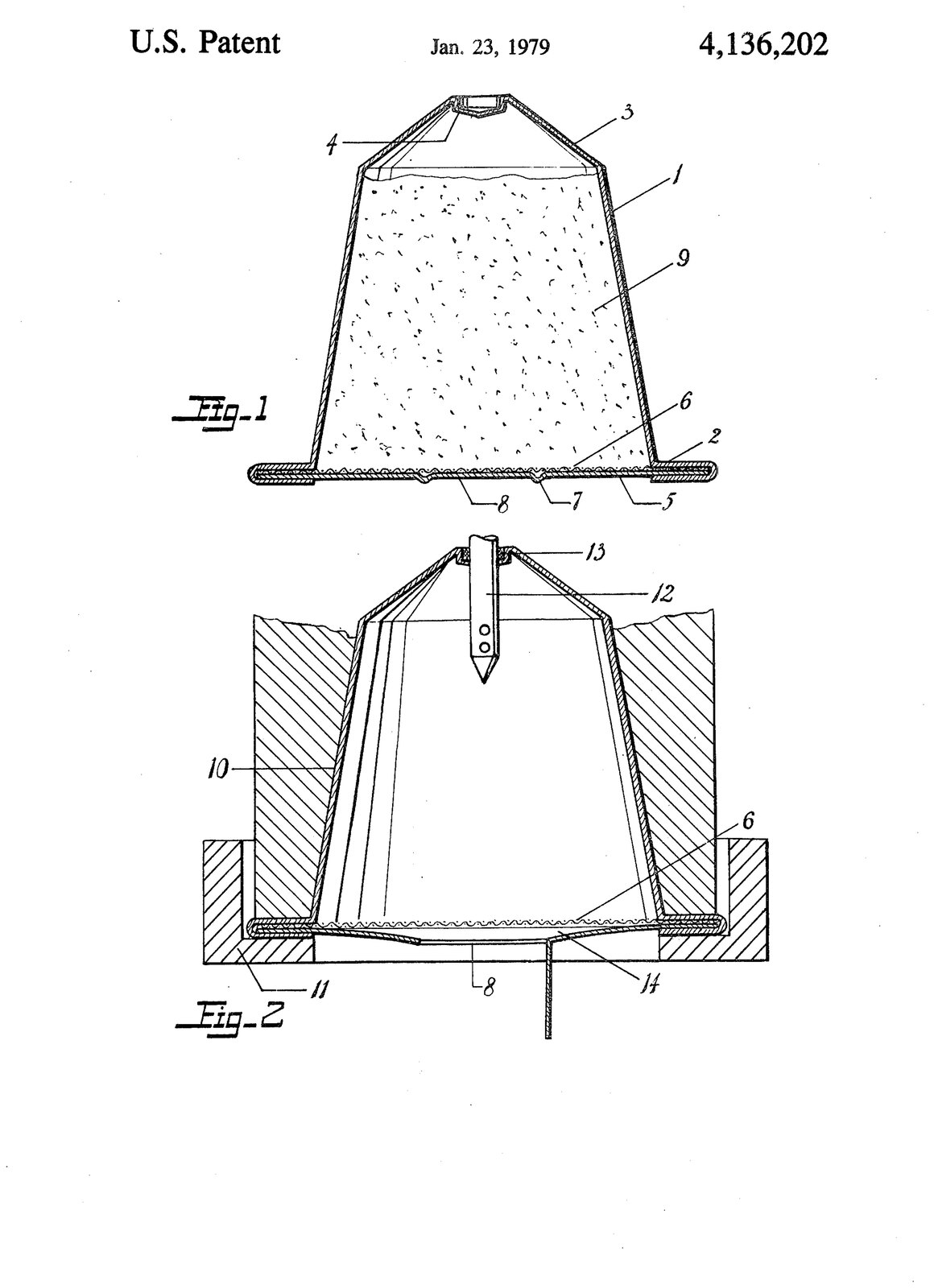
Armed with this insight, Favre designed a sealed “monodose” system that encloses a measured amount of ground coffee and a pocket of air inside a small capsule. When hot water is forced through the capsule, the trapped air expands, helping generate a rich crema. Tasting Table notes that this closed system “seals air and ground coffee in a small capsule before water is forced through,” underscoring the centrality of air in Favre’s concept2.
From Patent to Product: 1976 Patent and 1986 Launch
Nestlé secured a patent for Favre’s capsule system in 1976, naming Favre as the inventor3. Despite the patent, Nestlé’s leadership was initially hesitant; it took roughly a decade before Helmut Maucher, then director, approved Nespresso as a dedicated subsidiary1.
In 1984, two prototype machines were tested across Switzerland, Italy, and Japan, laying the groundwork for commercial production. Under Favre’s supervision, the first capsules reached the market in 19861. Nestlé’s official timeline confirms that Nespresso launched that same year in Japan, Italy, and Switzerland, with the stated aim of letting anyone brew a cup “like a skilled barista”5.
The initial launch targeted bars, hotels, and offices as a luxury offering, but sales lagged. In 1988, Nespresso repositioned the brand toward high-end consumers, reaching France and the United States about two years later1. This strategic shift helped the brand find a broader audience and set the stage for the global presence it enjoys today.


Material Evolution: From Prototype Shapes to Aluminum
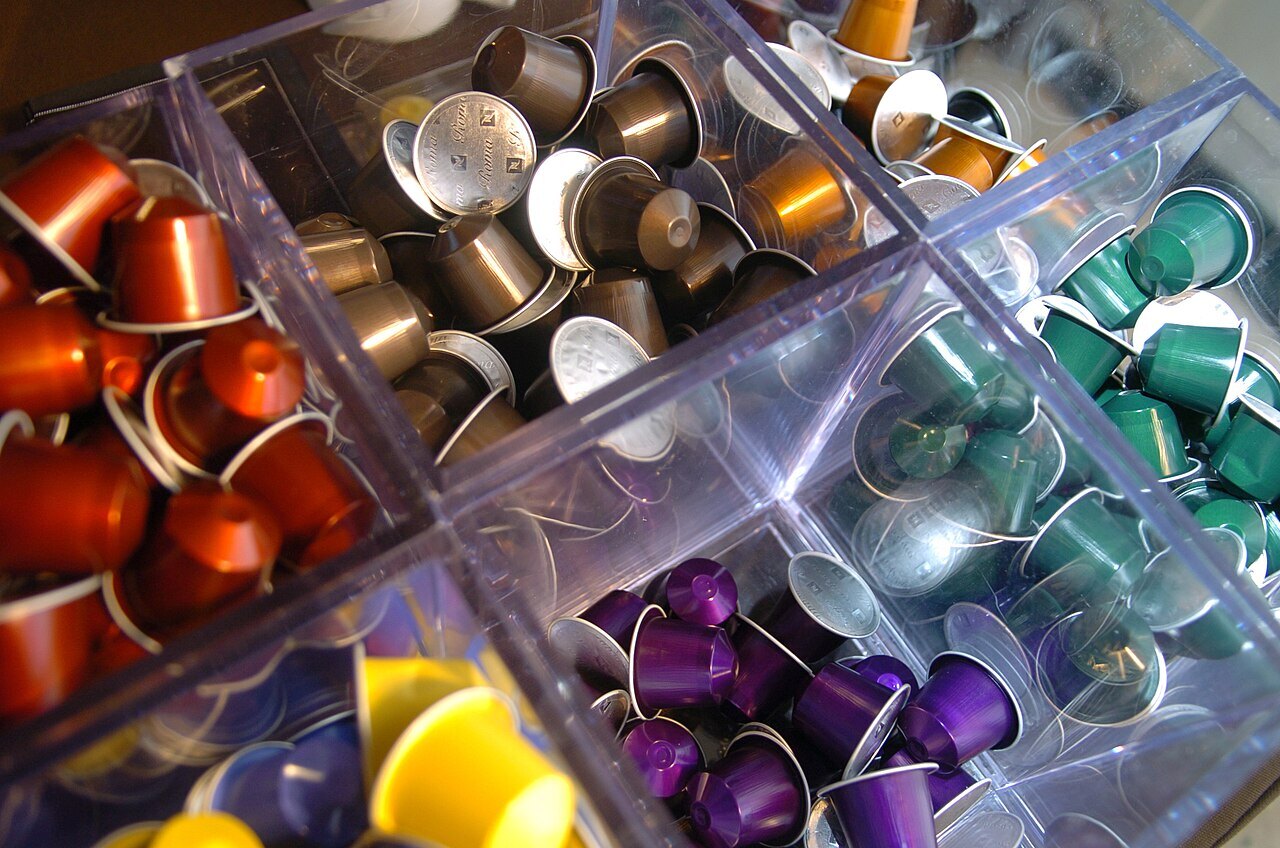
Before the official launch, capsule prototypes experimented with hat- and bowler-shaped forms, a detail highlighted by Nespresso’s own Spanish-language blog4. In 1994, the company standardized the capsule body in aluminum4. Wikipedia confirms that modern Nespresso capsules consist of an aluminum body and a perforated aluminum top, with the interior lined by a food-grade lacquer3.

The Vertuo Revolution: Centrifusion and New Capsule Language
Nespresso introduced the VertuoLine in February 2014 for the United States and Canada3. Vertuo capsules are larger, round, and carry a barcode in the metal rim. The machine reads this barcode and spins the pod at speeds up to 7,000 rpm, a process described by Tasting Table as “Centrifusion extraction”2.
The centrifugal force drives water through the coffee grounds uniformly, allowing the system to brew a range of cup sizes, from a short espresso to a half-liter coffee, while still delivering a dense crema, as noted in Nespresso’s blog4.
Answering Common Questions
Who invented the Nespresso capsule?
Eric Favre, an aerodynamics engineer from the Swiss canton of Vaud, designed the sealed monodose capsule while working for Nestlé’s packaging department1. He is listed as the inventor on the 1976 Nestlé patent3.
Is the Rome coffee bar story true?
According to House of Switzerland, Favre and his Italian wife visited Rome’s Caffè Sant’Eustachio, where a barista’s short-burst lever technique inspired Favre’s focus on oxidation and air in espresso flavor1.
Why is a Nespresso capsule sealed?
The sealed “monodose” design traps air and ground coffee before water is forced through, ensuring that the expansion of the trapped air creates the crema that defines Nespresso espresso12.
When did Nespresso launch?
Nespresso officially launched in 1986 in Japan, Italy, and Switzerland, as documented in Nestlé’s company timeline5.
How is Vertuo different from the Original line?
Vertuo uses larger, round capsules that carry a barcode in the metal rim. The machine reads the barcode and spins the pod up to 7,000 rpm, employing centrifugal extraction (Centrifusion) to brew a broader range of cup sizes with a denser crema24.
What does the name Nespresso mean?
The brand name is a portmanteau of “Nestlé” and “espresso”3, reflecting the company’s ambition to bring espresso-style coffee to a wider audience.
Closing thoughts
From an aerodynamics engineer’s curiosity about air in espresso to a globally recognized aluminum pod, the Nespresso capsule exemplifies how a single design decision can ripple through technology, branding, and consumer habits. The sealed monodose system traps air before water is forced through, and its evolution, from early prototype shapes to aluminum construction and finally to barcode-driven centrifugal extraction, shows a continuous commitment to marrying engineering precision with coffee culture. Understanding this design history not only clarifies why the capsule looks and works the way it does, but also highlights the interplay between material choice, patent strategy, and market positioning that has kept Nespresso relevant for nearly five decades.


