history
The History of the French Press: Patents From 1929 to Chambord
By Home Espresso Bar Editorial Team · November 1, 2026

The French press is often presented as a single invention, but its design evolved over more than a century through a series of patents, material experiments, and commercial pivots. By the end of this article you will know who first filed a press-like patent, why the 1929 Milan design lists three names, what mechanical innovations Faliero Bondanini introduced in the late 1950s, how the press acquired the “Chambord” name, and how Bodum ultimately secured the brand. You will also learn why the popular legend of an accidental discovery by an elderly French shepherd lacks any documentary support.
Key takeaways
- A forerunner press-style patent was filed in 1852 by Frenchmen Mayer and Delforge, featuring a cheesecloth filter and no sealing mechanism3.
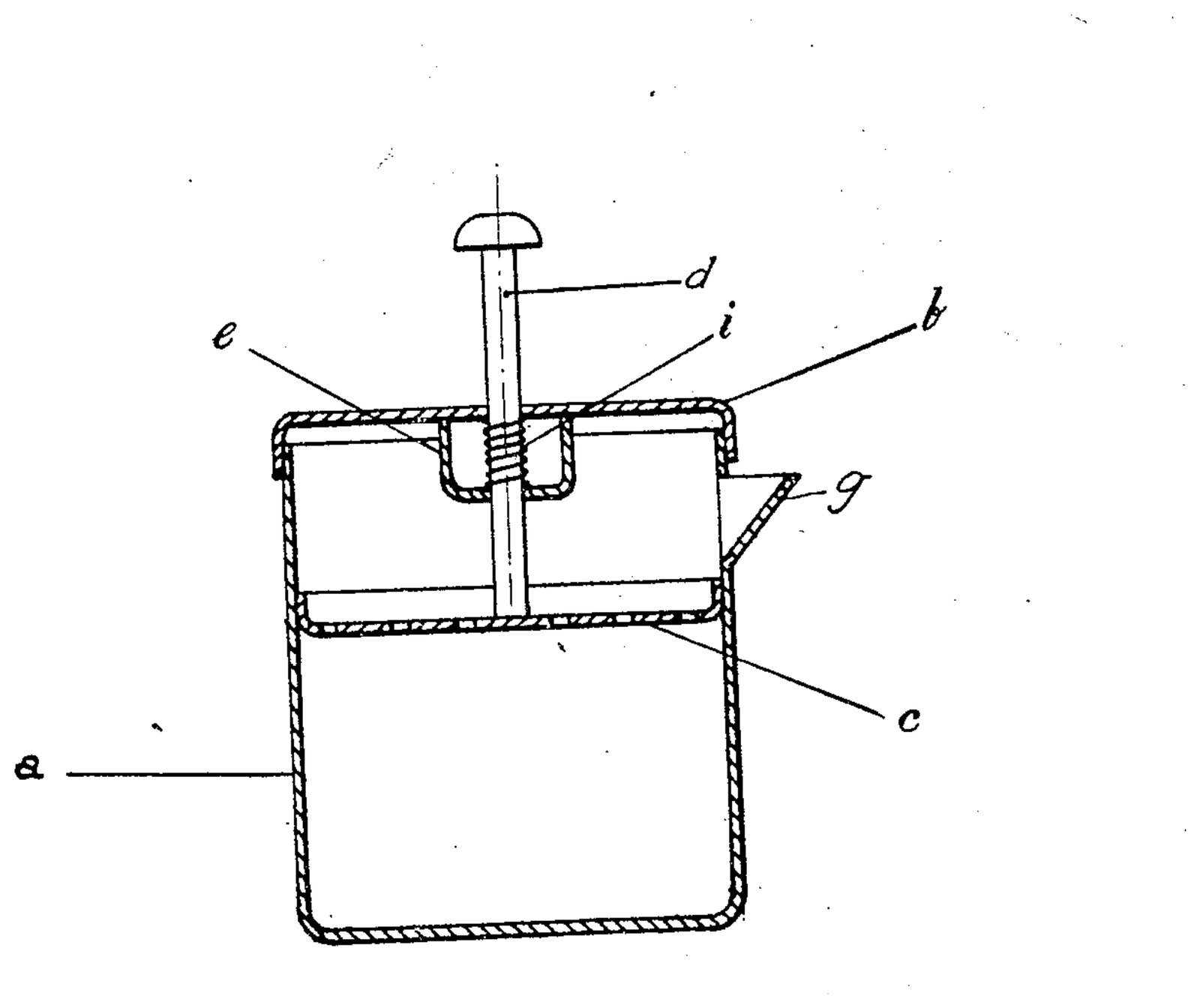
- The 1929 US patent 1,797,672, filed by Ugo Paolini with rights split between Attilio Calimani and Giulio Moneta, introduced a spring-held porous piston that could be positioned at any depth1.
- Faliero Bondanini’s 1959 US patent 2,900,896 added flexible metal tongues and a dual-disk filter system to improve seal integrity and prevent premature piston sinking2.
- The press became known as the “Chambord” after being produced under the Melior brand at the Martin S.A. clarinet factory in France, later distributed by Bodum in Denmark and eventually owned outright by Bodum36.
- The romantic story of a French shepherd stumbling upon the press is unsupported by historical evidence and appears to be a later myth5.
Early forerunners and the 1852 patent
The 1852 patent by French inventors Mayer and Delforge described a forerunner of the French press that used a cheesecloth filter and had no seal around the filter3. Sheldrake notes that this early model was not made of glass and featured a longer spout than modern presses, while Perfect Daily Grind and Wikipedia state that it had no seal around the filter5. There is no record that the 1852 design entered mass production, and the popular anecdote of an elderly Frenchman discovering the press by accident has no historical documentation5. Nonetheless, the 1852 filing establishes a conceptual lineage: a vessel, a filter, and a method of separating grounds from liquid.


The Milan innovation: US 1,797,672 (1929)
A more recognizable ancestor of today’s French press emerged from Milan in the late 1920s. Ugo Paolini filed US patent 1,797,672 on 2 April 1929, claiming an Italian priority date of 2 April 1928, and the patent was granted on 24 March 19311. The application lists Attilio Calimani and Giulio Moneta as co-owners, which explains why the design is often credited to three names3.
The patent describes a two-part system: a vessel for water and coffee, and a removable cover that houses a guide for a porous piston-like filter. The filter is attached to a rod and can be pressed down to the bottom of the vessel, forcing the brewed liquid through the porous material while the grounds remain trapped below1. A key mechanical advance is the spring coiled around the rod inside the cover; the spring grips the rod by friction, allowing the piston to stay at any set depth without slipping back1. Additionally, the cover incorporates a dedicated pouring passage that lets the brew be poured without removing the cover1. This combination of a spring-held piston and a built-in pour spout forms the core of the modern French press design.
Faliero Bondanini’s 1959 filter pot
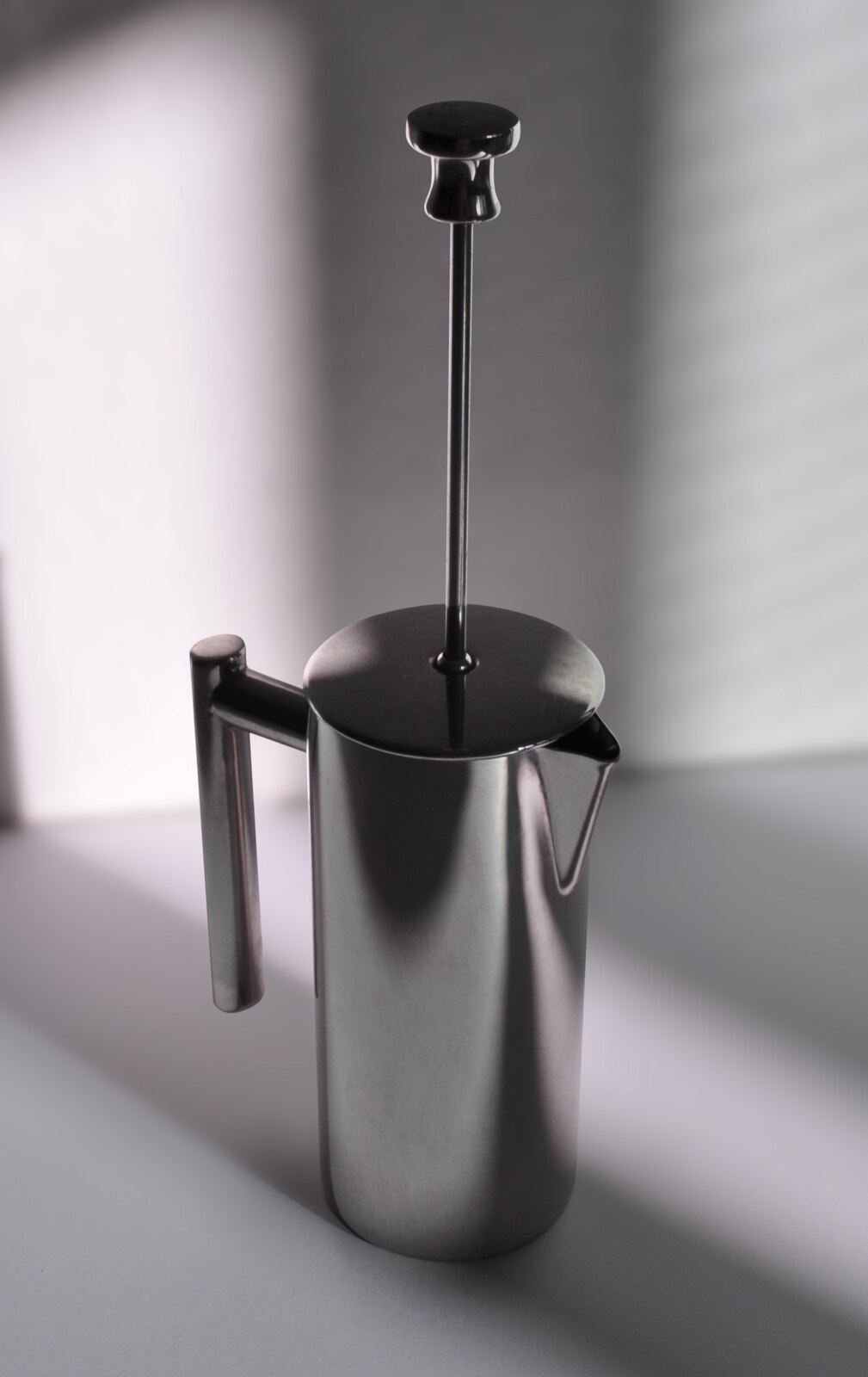
The next major design leap arrived in the 1950s with Faliero Bondanini’s patent. Bondanini filed US patent 2,900,896 on 16 July 1957, claimed a priority date of 25 February 1955, and received the grant on 25 August 19592. Bondanini’s device is described as a roughly cylindrical pot, typically glass or porcelain, with a spout and a liquid-permeable piston mounted on a rod that passes through a removable cover to an external handle2.
First, the piston’s filter sits between two open-work metal disks, one of which is dish-shaped with its wall slit into flexible tongues that flex to fit irregularities in the pot and add friction so the piston does not sink early. Second, the filter itself may be a woven mesh of boil-resistant organic fibers or an inoxidizable metal wire, and the surrounding disks have perforations of about one millimeter or less for an initial coarse filtration stage2.
Wikipedia says Bondanini patented his version in 1958 and that it was made at the Martin S.A. clarinet factory in France under the Melior brand. Perfect Daily Grind adds that the French market knew the device as the “Chambord,” and that it was later exported to the United Kingdom as “La Cafetiere Classic”3.


From Melior to Chambord: commercial adoption
Bodum’s involvement began when the Danish company started distributing the Chambord in Denmark. Over time Bodum acquired the rights to the Chambord name and the associated factory, a move confirmed by Perfect Daily Grind3. Wikipedia says Peter Bodum founded Bodum in Copenhagen in 1944, and his son Jørgen took over in 1974, launching the Bistro, Bodum’s first French press model6. Wikipedia says Bonjour Imports launched the Cafetiere Chambord in the early 1980s, and Bodum purchased the rights to the name in 1983 before acquiring Martin S.A. outright in 19916.
A Melior press appeared in the 1965 film The Ipcress File starring Michael Caine, which may have helped its popularity4.
Answering common questions
Who invented the French press?
The concept traces back to the 1852 patent by French inventors Mayer and Delforge, but the design that resembles today’s press, featuring a spring-held porous piston, was first patented in the United States by Ugo Paolini in 1929, with ownership shared by Attilio Calimani and Giulio Moneta1. Later refinements by Faliero Bondanini in the 1950s added flexible-tongue seals and a dual-disk filter system2.
Why is the 1929 patent credited to three different names?
Paolini was the inventor, but the rights to the invention were assigned equally to Calimani and Moneta, resulting in all three names appearing on the US patent record1. Perfect Daily Grind credits Calimani and Moneta with the 1929 design, while Wikipedia describes the Milan designers’ 1928/1929 spring-sealed patent3.
What did Faliero Bondanini change?
Bondanini introduced a filter that sits between two open-work metal disks, one of which is dish-shaped with its wall slit into flexible tongues that flex to fit irregularities in the pot and add friction to prevent the piston from sinking early; the filter itself may be a woven mesh of boil-resistant organic fibers or an inoxidizable metal wire, and the surrounding disks have perforations of about one millimeter or less for an initial coarse filtration2.
Why is it called a Chambord?
The press was known in France as the Chambord and was produced at the Martin S.A. clarinet factory under the Melior brand3.
How did Bodum come to own the Chambord?
Bodum first acted as a distributor for the Chambord in Denmark, later purchasing the rights to the name and the associated factory. The company’s acquisition timeline includes buying the Chambord rights in 1983 and acquiring Martin S.A., the original manufacturer, in 19916. This gave Bodum full control over production and branding of the classic press.
Is the story of the French shepherd or old man true?
No. Sheldrake’s research finds no documentary evidence for the legend of an elderly Frenchman or shepherd accidentally inventing the press. The narrative appears to be a later myth rather than a verifiable historical event5.
Closing thoughts
The French press did not emerge from a single eureka moment; it is the result of incremental engineering solutions spanning more than a century. From the cheesecloth-filtered 1852 prototype, through the spring-sealed Milan design of 1929, to Bondanini’s flexible-tongue refinement in the late 1950s, each patent addressed a specific functional challenge, seal integrity, ease of pouring, and consistent extraction. The commercial journey, from the Melior-branded Chambord produced in a French clarinet factory to Bodum’s global stewardship, illustrates how a well-engineered design can endure, adapt, and become a cultural icon. Understanding this lineage enriches the experience of every cup brewed with a French press today.


