history
The History of Baratza Grinders: From the Maestro to the Encore
By Home Espresso Bar Editorial Team · November 1, 2026

The brand’s journey is rooted in a series of modest engineering tweaks rather than sudden breakthroughs. By the end of this article you’ll understand who founded Baratza and when, why the company’s name remains unexplained in public sources, how a tinkered Solis 166 grinder evolved into the Maestro and later the Encore, what the Encore’s Gearbox 2.0 changed mechanically, when the Breville Group took ownership, and where the machines are produced today.
Key takeaways
- Kyle Anderson and Kyra Kennedy founded Baratza as equal partners after Anderson left Acorto in 19995.
- The Maestro originated from Anderson’s modification of the Solis 166 grinder, a change that later formed the basis of the entry-level Encore1.
- The 2012 Encore introduced Gearbox 2.0, swapping the metal drive gear for a quieter, shock-resistant glass-filled thermoplastic gear with a thermal cut-out4.
- Baratza has produced roughly 150 000 grinders a year with a staff of about 20 employees, all manufactured by the same Taiwanese partner since 20011.
- The Breville Group announced its acquisition of Baratza on 1 October 2020, promising to keep the team and brand unchanged3; the founders echoed this continuity2.
Origins and founders
Baratza emerged from the partnership of two coffee-industry veterans. Kyle Anderson, who earlier co-invented a super-automatic espresso latte machine in 1989 and launched the basement startup Acorto, left that company in 1999 under a non-compete agreement5. He joined forces with Kyra Kennedy, and the duo split ownership 50/501. While the sources do not explain the origin or meaning of the name “Baratza,” the partnership’s focus quickly shifted from espresso machines to the grinders that drive them.


From Solis to Maestro
The first design breakthrough came when Anderson examined the Solis 166 grinder, a small unit that had already found a niche among home espresso enthusiasts. Recognizing its potential, he re-engineered the internal components to adjust the grind range from fine to coarse enough to serve espresso. This modified version was dubbed the Solis Maestro1. The Maestro’s key innovation was a more versatile burr adjustment mechanism, allowing users to dial in espresso-grade fineness without sacrificing consistency at coarser settings.
The Maestro line and its evolution
Baratza initially planned to import small home espresso machines, but the success of Solis’s grinder prompted a pivot toward grinder development5. The Maestro series grew to include the Maestro Plus, distinguished by a heavier base, a timer knob, and a pulse button4. The Maestro line later ended with the Encore.


Encore: Redesign of the entry level
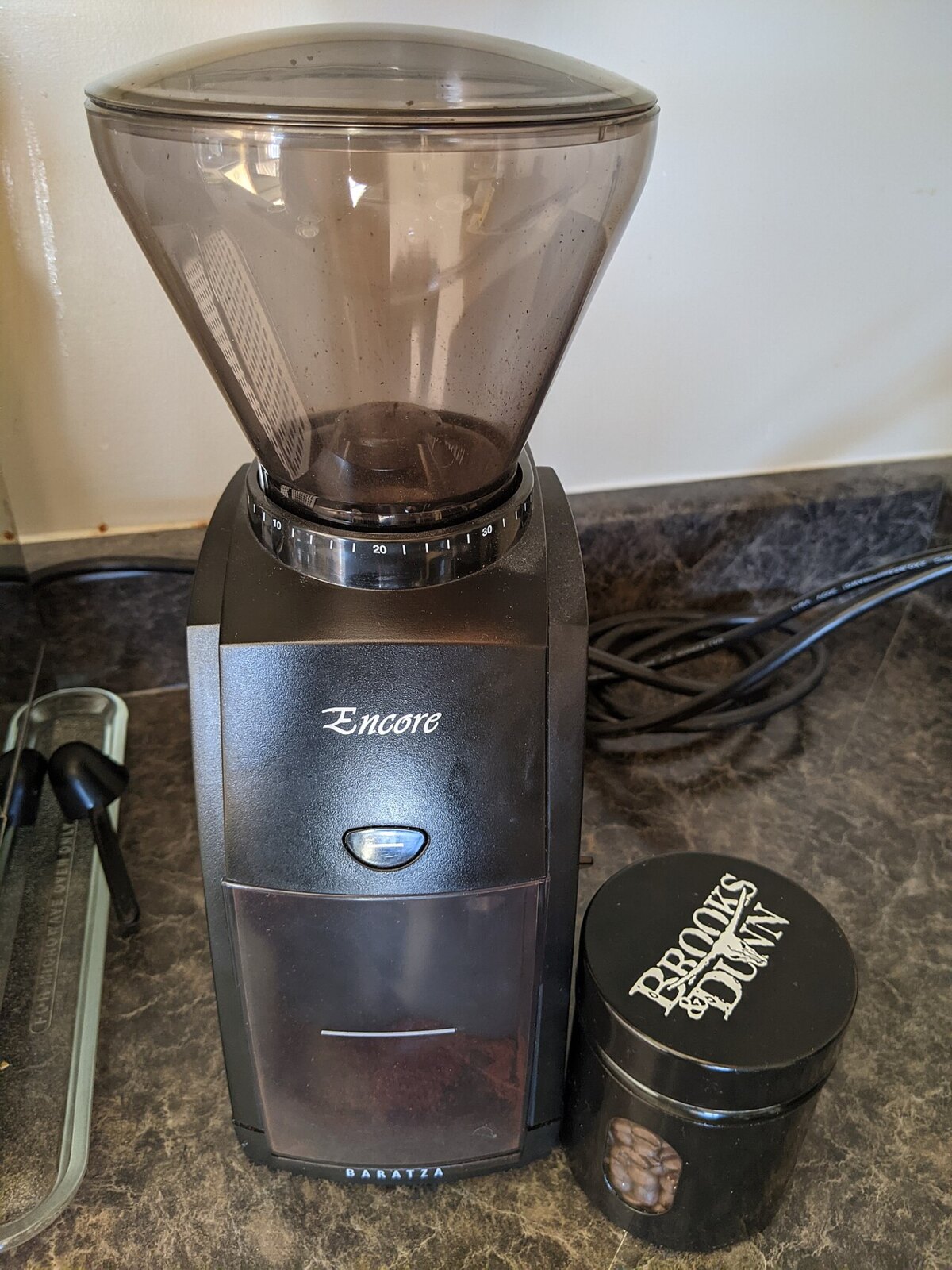
In March 2012, Baratza announced the Encore, positioning it as the successor to the Maestro Plus4. The Encore introduced an entirely new burr set that mirrored the conical-burr design of the Virtuoso Preciso4. This change gave the Encore a stronger espresso capability while preserving the ease of use that defined the Maestro line.
The most notable mechanical shift was the rollout of Gearbox 2.0. The original metal drive gear was replaced with a 15 % glass-filled thermoplastic gear, a material choice that reduced operational noise and increased shock resistance. In Baratza’s internal testing, the new gear also featured a thermal cut-out that protected the mechanism from overheating4. From a design perspective, the thermoplastic gear illustrates a move toward lighter, more resilient components, and it was described as quieter and shock-resistant4.
Later innovations and model timeline
Baratza’s lineup includes a series of specialized grinders:
- Virtuoso - Introduced as the first grinder sold under the Baratza name. Fresh Cup cites a 2004 launch, while Daily Coffee News records the introduction in 20061.
- Vario (2008) - Featured flat ceramic burrs.
- Preciso (2010) - Brought conical burrs and micro-adjustment capability, sharpening the brand’s espresso focus1.
- Grind-by-weight technology (2011) - Added a weight-based dosing option, expanding precision beyond time-based dosing1.
- Forte (2013)
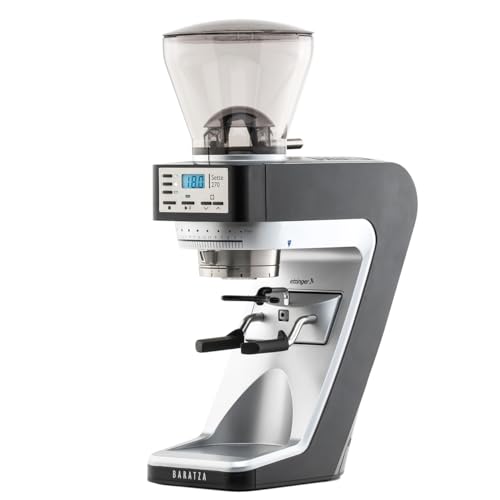
- Sette (2016) - A conical-burr grinder that integrated an Acaia scale, blending dosing precision with grind control5; Daily Coffee News confirms its 2016 debut1.
- Virtuoso+ (2019) - Added a digital timer with 0.1-second resolution, reflecting Baratza’s ongoing commitment to fine-tuned user control1.
Each successive model built on the Maestro’s core principle, adjustable burrs for consistent grind, while introducing new materials, electronics, or integrated scales to meet evolving consumer expectations.
Manufacturing and scale
Baratza’s production has remained anchored in Taiwan since 2001, when the company partnered with a local manufacturer that continues to assemble its grinders1. By 2019 the operation was churning out roughly 150 000 grinders per year with a workforce of about 20 employees1. This relatively lean production model underscores the brand’s focus on engineering consistency rather than mass-market volume.
Acquisition by the Breville Group
On 1 October 2020, the Australian kitchenware conglomerate Breville Group announced its acquisition of Baratza3. The announcement emphasized that the existing team and brand identity would remain intact, a promise reinforced by statements from the founders that “we are the same team and brand”2.
Answering common questions
Who founded Baratza and when?
Kyle Anderson and Kyra Kennedy co-founded Baratza as equal partners after Anderson’s departure from Acorto in 19995.
What does the name Baratza mean?
The available sources do not provide an explanation of the name’s origin or meaning.
How did the Maestro lead to the Encore?
The Maestro was a modified Solis 166 grinder that expanded the grind range for espresso use1. Its design served as the foundation for the entry-level Encore, which adopted a new burr set similar to the Virtuoso Preciso and introduced Gearbox 2.04.
What changed with the Encore’s gearbox?
Gearbox 2.0 replaced the metal drive gear with a 15 % glass-filled thermoplastic gear, delivering quieter operation, greater shock resistance, and a thermal cut-out that protects the gears under test conditions4.
When did Breville Group acquire Baratza?
The acquisition was announced on 1 October 20203.
Where are Baratza grinders made?
All grinders have been manufactured in Taiwan by the same partner since 20011.
Closing thoughts
Baratza’s design history is a narrative of incremental refinement rather than radical reinvention. Starting from a modest Solis grinder, the founders’ modifications produced the Maestro, a platform that endured long enough to be re-engineered into the Encore with a modern thermoplastic gearbox. Subsequent models, Virtuoso, Vario, Preciso, Sette, and others, each added a distinct technical layer while preserving the core principle of precise, adjustable burrs. The brand’s steady production in Taiwan, modest output scale, and continuity through the 2020 Breville acquisition illustrate a business model built on engineering consistency and a clear focus on the grind itself.


